
Mrs Blake had lived on Anglesea Drive for over thirty years now. She’d watched Rosie’s gender transformation, as well as Frank’s stunted evolution. She thought she remembered Frank’s mother, but her husband Jack assured her it couldn’t be. Rosie always strutted outside Mrs Blake’s home, a queen bee in her hive. She held her head particularly high when she crossed the doorstep of number 11 Anglesea Drive. She did this to exude confidence, hiding the fear Mrs Blake evoked in her.
She would inevitably think back to the night she murdered her wife, for she remembered the light in number 11 turning on as Alice drew her last breath. It was unusually warm that evening. Frank had been put to bed in his nappy, with the window open to ease his first sweat. Alice and Ed shared a glass of wine over which they exchange amorous glances hinting at a heated night ahead. A pineapple stood on the kitchen counter, ready to be carved. Ed was hungry, and fretted that Alice had forgotten to prepare his dinner. She’d been distracted since the arrival of the baby. In truth, she’s been distracted by the events of a fortnight ago and the strong feelings she felt for her husband despite that night’s revelation. Ed had seen her watch him play in the arms of a man, as uninhibited and daring as he’d never been with her. He could feel her stare on his naked back, but never turned around to meet her eye. He’d carried on loving the stranger in his house, occasionally looking up to Alice’s reflection in the mirror. He was amazed at the pleasure he felt, fuelled by his anger at his wife, and the murderous spark he caught in his eye. Alice and Ed never revealed each other’s secret. To Alice, she’d caught her husband with a man. To Ed, he’d enjoyed a passionate moment with an anonymous lover and revelled in the immense pleasure brought on by the presence of a spectator.
Hunger rumbled in Ed’s stomach, echoing the excitement he felt for the upcoming entertainment of the evening. His plan was to woo Alice into alcoholic submission, and squeeze her throat until life spewed out of her. He would then dispose of her useless body in the creek behind number 11; the unimaginative Blakes would never suspect him. And so, on an evening like so many others, she drank, died, and disappeared, leaving behind a son and a relieved husband. He would always blame her for leaving. He would tell her family they had quarrelled and she had left in a rush, crossing their road inadvertently, hit by a bus. Frank slept through his mother’s murder, and awoke the next morning, clueless.
Frank has been clueless since; always led to believe that bad things happen to good people – “that’s just the way it is”, would say Rosie. She would add “you’re a thinker, not a doer, so don’t expect much from life”. She saw him as the simpleton he was, a young man who believed that life would happen to him. He was tall and ginger like her, and easily the most uncharismatic Frank to be born on British soil. He spoke in murmurs and offered a limp handshake to the rare few who extended theirs. His breath smelt of hunger, though he was regularly fed. And the sweat on his brow had never truly left him since that warm evening 22 calendars ago. She would laugh to herself as she found various ways to describe him, one more demeaning than the other. He wasn’t worthy of her love, which is why, she told herself, she would never try to love him. She was left with other duties towards him which she performed negligently. She always assumed the trade-off between her life with Frank’s mother, and their current arrangement, as fair. She kept him warm, clothed and fed in exchange for being at once the woman and the man of the house. She thrived on this thought. Rosie’s teachers at her all boys’ school had once described her as uncompromising; an astute observation, she thought.
Frank is planning to go church this evening. He’ll be taking a shortcut to get there. As he sets off, he rethinks the letter, redrafting it but always using the same beginning and end. He wishes that his Dad could see him today: a hardworking, churchgoing, strapping young lad. He walks through dusk, like a puppy finds its way to the nipple, trustful and instinctive. But tonight his footing is clumsy, he trips over a raised pavement slab. He can’t fathom the reason for his gaucheness. He’s distracted by his inadequacy, convinced that his father must be watching from his seat in heaven, ‘tutting’ away in disapproval. He attempts to correct his gait, clutching his fists, and frowning a determined frown. In doing so he hopes to appear confident once again. He reaches the shortcut fast, and despite his awkwardness, decides to take the narrow alley between number 11 and number 13 Anglesea drive. He peers into Mrs Blake’s window hoping to catch a glimpse of teatime and intimacy. But the lights are off. It seems the Blakes are out for the evening. Emerging from this thought, he notices he’s halfway down the passage. This realisation brings him back to awareness, and he feels uneasy again. The walls are dizzying in their proximity to each other, and a foul smells rises from the stagnant water collected where the sloping cobbles join. He walks as if on ice, afraid to slip, fall and humiliate himself. As an afterthought, he remembers the time, and decides against shortcuts in the future. But there’s an intriguing moistness in the air tonight which is making his thoughts clammy and unclear. It’s compelling somehow. He feels the need to investigate. He sees a lit window looming ahead, towards which he shuffles attentively. He peers in. At first he’s taken aback by the sight of an unusually tall woman, but soon recognizes the shape as that of his aunt Rosie. But she isn’t alone. She’s in the company of a man. Frank is startled and can’t look away. But she sees him, always the eagle eyed member of the family. He panics and sets off like a hunted deer, eyes alight with the burn of the setting sun.
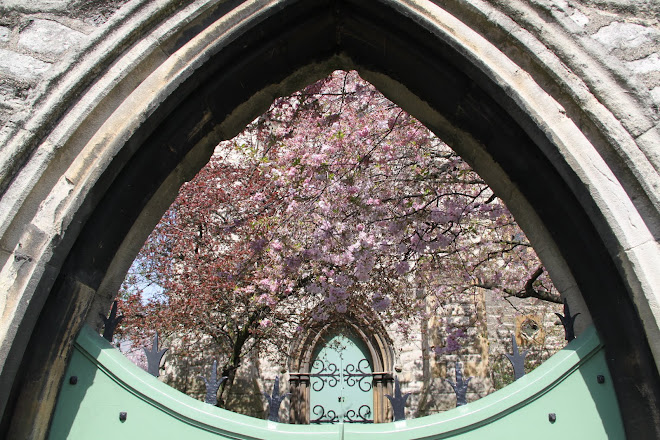
He’s an action film star. He runs, jumps, rolls on the ground, dodging the invisible enemy and showing off. He finds a gate, and attempts to jump over it. But the alley is too narrow to gather speed. He tries the handle and the gate swings back as if waiting for him. He dashes in, breathless.


11 years ago


